A clear, professional guide from a Sicilian architect,so your dream stays beautiful, feasible, and hassle-free.
BUYING, BUILDING AND RENOVATING IN SICILY : A FULL GUIDE
This article is part of an ongoing guide for foreign buyers who want to buy, build, or renovate in Sicily with confidence.
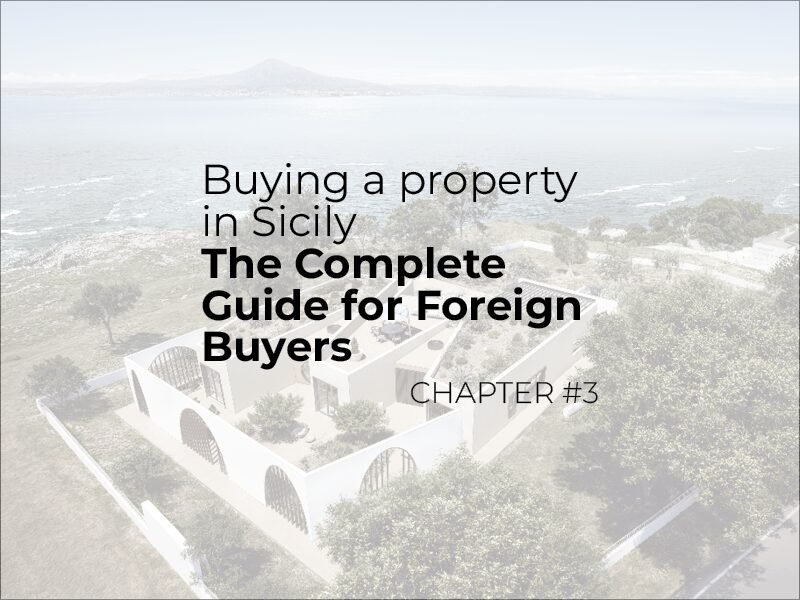
Chapter 3
Why smart foreign buyers still get caught
This chapter covers the most common mistakes foreigners make when buying property in Sicily often without realising it. You’ll learn why beauty is not the same as feasibility, why verbal reassurance isn’t protection, and why rural projects fail on access and utilities. The aim is to help you spot risk early and make decisions with documented clarity.
Most foreign buyers don’t lose money in Sicily because they are careless. They lose money because they are optimistic in exactly the wrong places. Sicily is emotionally powerful: landscape, architecture, lifestyle. And when emotions run high, people tend to accept reassurance rather than evidence. They move too quickly from “I love it” to “I’ll make it work”.
I’ve seen this pattern repeatedly intelligent people, experienced professionals in their own countries, suddenly feeling like beginners the moment they enter an unfamiliar system. A seller sounds confident. An agent says something is “easy”. A neighbour confirms it’s “always been like this”. And because you are a guest in a new culture, you don’t want to offend anyone by asking too many questions. That is how risk enters a project, quietly.
The truth is simpler and kinder: buying property in Sicily is not dangerous when you use a professional method. Problems come from predictable traps. If you learn the traps early, you can avoid most stress and make decisions with calm, respectful confidence.
The 7 most common mistakes (and what to do instead)
Mistake 1 — Emotional acceleration (beautiful ≠ feasible)
The first trap is confusing “beautiful” with “feasible”. A property can be stunning and still be a poor fit for your goals. Maybe it sits inside a sensitive landscape context. Maybe the building’s history is unclear. Maybe access is fine in practice, but fragile in law. None of this removes beauty. It simply changes deliverability, and deliverability is what your budget and timeline will live with.
What to do instead: slow down at the right moment. Separate your emotional reaction from feasibility checks before any deposits or binding steps.
Mistake 2 — Relying on the wrong document (Catasto ≠ legality)
Foreign buyers often assume that if something appears on a cadastral plan, it must be legal. In Italy, Catasto records are important—but they are not the same as planning legitimacy. They help identify units and support taxation; they do not automatically prove that what exists was authorised correctly.
What to do instead: treat Catasto as identification, not as proof. Planning legality must be confirmed through the authorised permit history and legitimate status of the property.
Mistake 3 — Verbal reassurance instead of written evidence
You will hear phrases like “It’s all fine,” “Don’t worry,” “We can regularise later,” or “Everyone does it.” Sometimes the speaker is honest. Sometimes they are simply unaware. But your money does not respond to good intentions. Your project responds to documents, approvals and verifiable facts.
A professional rule: if it matters, get it in writing or treat it as unknown.
What to do instead: request evidence for any point that affects price, scope, permits or timelines. Written clarity is not bureaucracy; it is protection.
Mistake 4 — Underestimating access and utilities (rural Sicily)
In rural Sicily, access and utilities are not minor details; they are structural realities. Legal access may depend on easements, historical paths, or informal arrangements that feel stable until tested by a transaction. Water may be private or shared. Wastewater solutions depend on site conditions and regulations. Electricity connections can be straightforward or not.
What to do instead: verify legal access and utilities feasibility early, especially before committing to “cheap” rural properties. Many become expensive because the basics were assumed.
Mistake 5 — Treating permits as a formality (permits are strategy)
Permits are not just a stamp; they are a strategy. The correct route depends on what you want to do, what exists, what can be proven, and what constraints apply. When buyers start design discussions before the permit pathway is clear, they often waste time and money on drawings that later must be reduced, redesigned, or reframed.
What to do instead: clarify the permit route at concept level before investing in design development.
Mistake 6 — Budgeting as a single number (use layered budgets)
In Sicily, especially with older buildings, certainty arrives progressively. A calm budget is layered: works, surrounding costs, interiors, and contingency. When buyers treat budget as a single fixed figure, every discovery feels like a crisis. When buyers treat budget as a structure, discoveries become manageable decisions.
What to do instead: plan with ranges and layers, not a fragile single number.
Mistake 7 — Choosing teams for comfort, not clarity (method + writing)
Some buyers choose the friendliest person, the cheapest quote, or the team that promises the fastest schedule. A better rule is this: choose people who explain the process clearly, put commitments in writing, and have a disciplined method for decisions and change control.
What to do instead: select your team based on clarity and governance. In Italy, clarity is not a personality trait it is an operational asset.
A professional correction: the evidence-first method
At this point, it may sound like I’m describing Sicily as complicated. I’m not. I’m describing a place where history matters and where the legal/technical framework is real. You don’t need to become a lawyer. You need a technical team who can translate the framework into decisions you can trust.
Avoiding these mistakes does not require paranoia. It requires sequence: shortlist with deliverability in mind, request key documents early, run a minimum feasibility screening, align legal/tax/technical tracks, and only then commit.
If you are already viewing properties, here is the most practical shift you can make today: stop asking only “Do I like it?” and start asking “Can this become what I need, on my timeline, inside my budget, with documented clarity?”
Quick red flags checklist (use this during viewings and shortlists)
- Pressure to pay a deposit before documents are shared.
- “Don’t worry” answers with no written evidence.
- Unclear permit history for terraces, extensions, or layout changes.
- Access that is informal or based on goodwill, not documented rights.
- Utilities described as “nearby” with no feasibility confirmation.
- Claims that constraints “don’t matter” without written confirmation.
- Budgets discussed as a fixed number with no contingency.
Milestones (this phase)
- Separate beauty from feasibility before you commit emotionally or financially.
- Request key documents early (permit history signals, constraints context, cadastral identifiers).
- Never treat cadastral plans as proof of planning legitimacy.
- Insist on written evidence for any point that affects price, scope, permits or timeline.
- Verify legal access and utilities feasibility early, especially for rural properties.
- Clarify the permit route strategy before investing in design development.
- Use a layered budget (works + surrounding costs + interiors + contingency).
- Choose teams based on clarity, method and written commitments—not on promises.
How Bureau69 Architects supports YOU
- Feasibility-first screening to identify hidden risks (constraints, access, utilities, permit story).
- Technical due diligence focused on legitimate status and deliverability, with a clear go/no-go note.
- Guidance on what documents to request and how to interpret them (in plain English).
- Permit route strategy so design effort is aligned with what can be approved.
- Budget and timeline structuring to reduce shocks and support calm decisions.
- Remote-friendly project governance for overseas clients: written updates, decision timing, change control.
If you have a specific property in mind, message me on WhatsApp for a pre-buy feasibility screening. If it looks viable, we’ll schedule a call and I’ll confirm next steps in writing.
FAQ
What are the most common mistakes foreigners make?
Confusing beauty with feasibility, assuming Catasto equals legality, relying on verbal reassurance, underestimating access/utilities, treating permits as a formality, budgeting as a single number, and choosing teams without a clear method.
Is Catasto proof a property is legal?
No. Catasto helps identification and taxation. Planning legality requires verifying authorised permit history and the property’s legitimate status.
Why are rural properties riskier than they look?
Because access and utilities are often assumed. Verify rights of way, water, wastewater and electricity feasibility early—before deposits or binding steps.
How do I reduce risk without paranoia?
Use sequence and written evidence: shortlist for deliverability, request key documents early, run a minimum feasibility screening, and only then commit.
Reading the guide